Understanding Weight Limits: Beyond the Gross Vehicle Weight (GVW)
Staying compliant with weight regulations is crucial for avoiding hefty fines and ensuring the safety of your operation. While the 80,000-pound Gross Vehicle Weight (GVW) limit (the total weight of your truck, trailer, and cargo) is a common benchmark, it's not the sole determinant of legality. Individual axle weight limits are equally, if not more, important. Exceeding these limits, even with a legal GVW, can lead to instability, equipment damage, and significant penalties. Think of it like building a tower of blocks – exceeding the weight limit on any single block risks the collapse of the entire structure. For more detailed information on truck dimensions, check out this helpful resource.
What are the key differences between overall weight and axle weight limits? The GVW represents the total weight of the entire vehicle and its load. However, axle weight limits dictate the maximum weight allowed on each individual axle. Overloading a single axle can cause severe damage to your vehicle and the road and is often punished more heavily than exceeding the GVW alone.
Mastering Weight Management: A Step-by-Step Guide
Effective weight management is a multi-step process requiring attention to detail and adherence to best practices. The following steps will help ensure compliance and optimize operational efficiency.
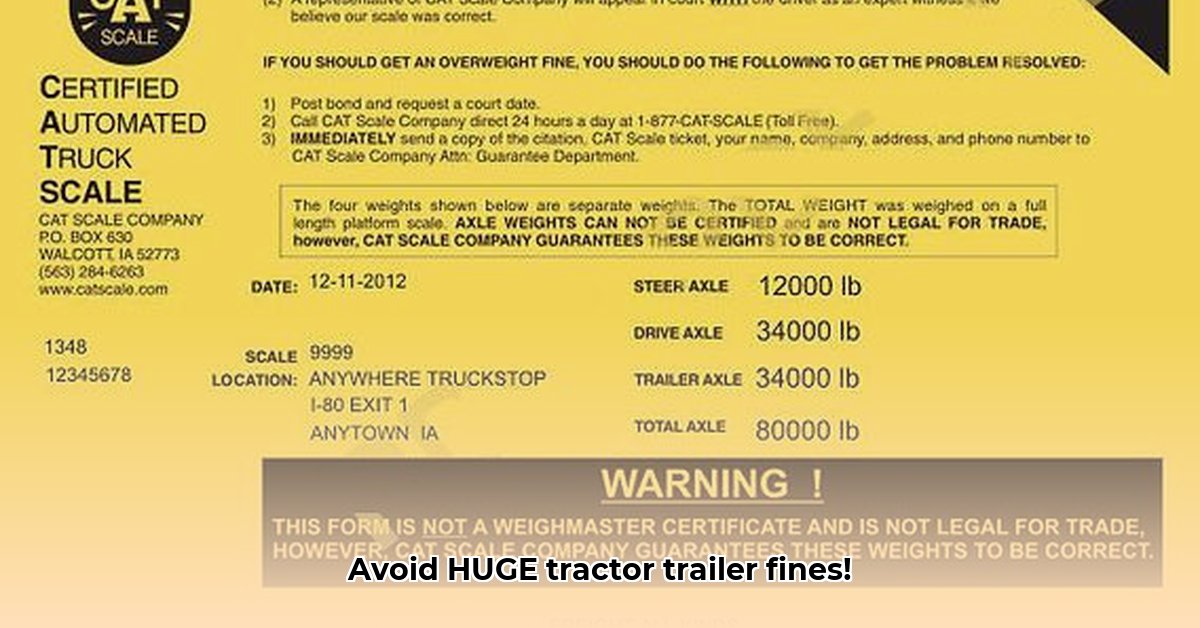
Pre-Trip Inspection and Weight Assessment: Before starting your journey, conduct a thorough pre-trip inspection, including a precise weight measurement of each axle using certified scales (e.g., CAT scales). This provides a crucial baseline for load planning and ensures you're not exceeding any limits before you start your trip. This step alone drastically reduces your risk of fines.
Strategic Load Planning and Cargo Distribution: This is where the real skill comes in. Distribute cargo strategically to achieve even weight distribution across all axles. Heavier items should be placed closer to the center of the trailer and balanced with lighter items to avoid excessive weight on any single axle. Efficient load planning not only prevents fines but significantly improves fuel efficiency.
Secure Your Load: Proper load securement is paramount. Use appropriate straps, chains, and other devices to prevent cargo shifting during transit. A shifting load can drastically alter axle weights, potentially causing violations even if your initial weighing was compliant.
Post-Load Weigh-In: After loading, conduct another weigh-in using certified scales to verify that your load distribution has maintained compliance with axle weight limits. This allows for any necessary minor adjustments before you hit the road.
Navigating State-Specific Regulations: Weight regulations vary significantly by state. Always research the specific limits for each state you'll be traveling through before commencing your journey. State Department of Transportation (DOT) websites are excellent resources for this information.
Understanding the Costs of Non-Compliance
The financial penalties for overweight violations can be substantial, costing thousands of dollars in fines. However, the consequences extend beyond monetary penalties. Axle overload can lead to premature equipment wear and tear, reduced fuel efficiency, increased risk of accidents, and potential legal implications. A proactive approach to weight management is a sound investment protecting your business's financial health and safety.
"Non-compliance can lead to substantial fines and damage your vehicle. It's far cheaper to invest in proper weight management than to incur the costs of repair and penalties," says Dr. Evelyn Reed, PhD, Engineering and Transportation Safety Expert, National Transportation Safety Institute.
Technological Advancements in Weight Management
Technology is playing an increasingly vital role in streamlining weight management. Weight management software and telematics systems provide real-time data for load optimization and route planning, taking into account state-specific weight restrictions. This can significantly reduce the risk of violations, save time, and improve fuel efficiency.
State-Specific Weight Limits: A Crucial Consideration
The following table provides a hypothetical illustration of how axle weight limits can vary by state. Always consult official state DOT websites for the most accurate and up-to-date information.
Example Table: Hypothetical Axle Weight Limits (lbs)
| State | Steer Axle | Single Axle (non tandem) | Tandem Axle |
|---|---|---|---|
| California | 12,000 | 20,000 | 34,000 |
| Texas | 12,000 | 18,000 | 34,000 |
| Florida | 12,000 | 20,000 | 34,000 |
| (Data is hypothetical and for illustrative purposes only. Always consult official sources for current regulations.) |
Conclusion: Prioritize Weight Management for Success
Successfully navigating the complexities of tractor-trailer weight limits requires a proactive and informed approach. By implementing the strategies and utilizing the technologies outlined in this guide, you can significantly reduce your risk of violations, improve operational efficiency, and safeguard your business's long-term success. Remember, compliance is not optional; it’s essential for a safe and profitable trucking operation.